
A Life Measured in Time
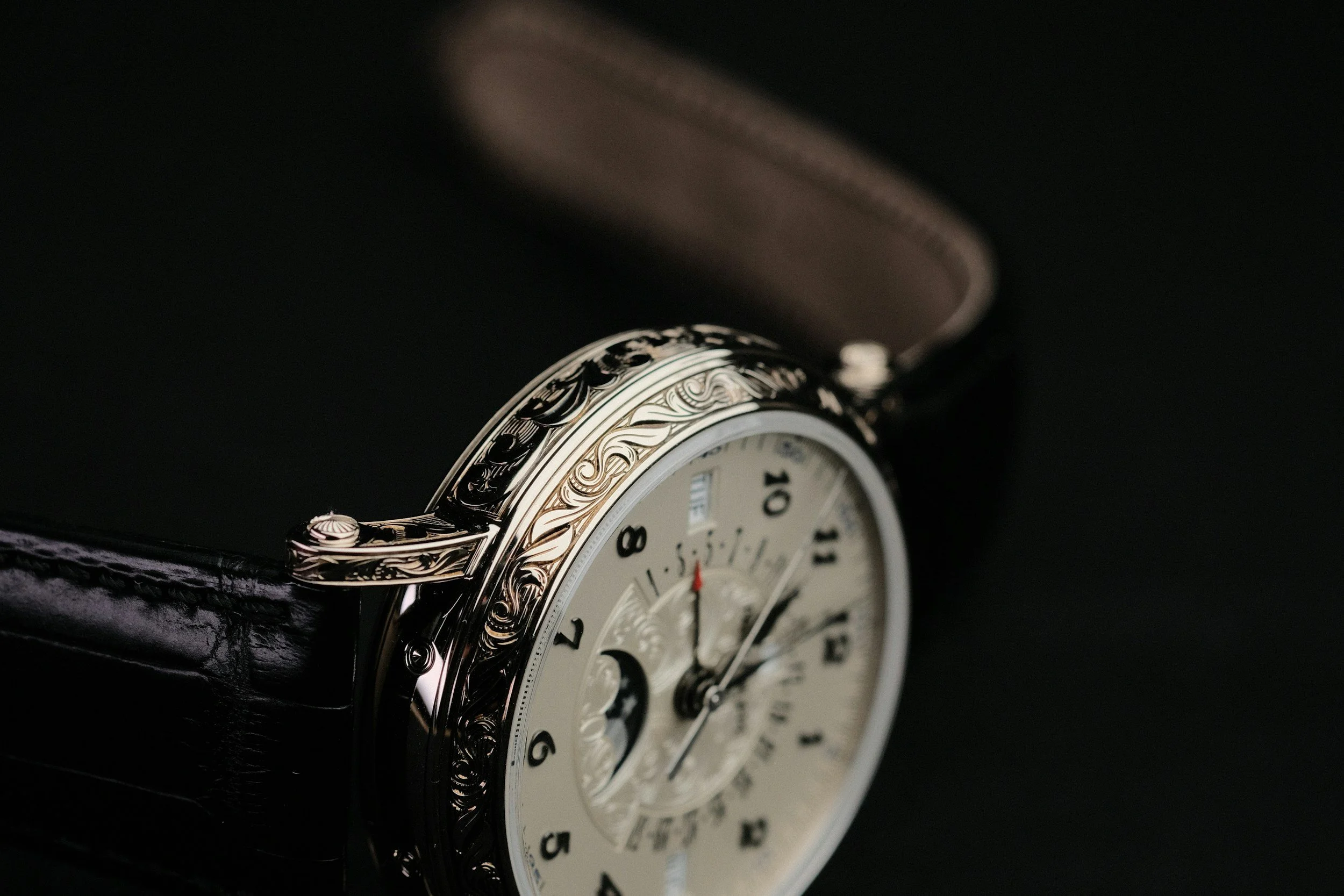
I have always loved complicated pocket watches and wristwatches. There is something deeply satisfying about the relationship between the time spent creating an object and the value that time ultimately gives it. That idea resonated with me from a young age and has stayed with me ever since.
I struck out on my own in 1983 after a fledgling career buying and selling pocket watches for my brother. Around that time, Swiss-made wristwatches were experiencing a renaissance, and I quickly realised I could sell almost any watch I happened to be wearing to fund the next one. I was still very much wet behind the ears when I arrived in London for the first time, armed with nothing more than my ancient Volkswagen Jetta and a sports bag with a squash racket poking out of the top. It seemed a good way to conceal the real contents: a small ring box, a few gold chains, some antique rings, and £2,500 in cash.
I didn’t care. I was off dealing.
I drove down from Manchester to London’s Beaumont Market, keen to arrive early so I could grab breakfast with the other grimy watch dealers over bacon sarnies. I wanted to be one of the boys. The reality was somewhat different. About thirty bustling stalls were laid out, piled high with jewellery and just about everything else imaginable. I stood there wondering how on earth I was going to make a living. I was more than nervous.
Still, I kept going.
It didn’t take long to learn that the real source of activity for international watch dealers was the Saturday morning market on Portobello Road. The only trouble was that I quite liked playing golf on a Saturday. That all changed when my beloved late partner, Denise, asked me a simple but life-altering question: “Do you want to be a businessman or a golfer?” In that moment, I realised I had reached a genuine crossroads. As she so often did, Denise helped me make the right choice.
From then on, I went to Portobello Road every Saturday morning for several years. It was there that I truly fell in love with the highly complicated world of Patek Philippe wristwatches. I wanted them all - chronographs, perpetual calendars, and anything else with layers of mechanical complexity. The more complicated, the better. Despite the fact that these watches were harder to sell than Rolex, I was drawn to both the craftsmanship and the people who sought them out along Portobello Road.
I had found my niche.
The world has changed a great deal since that first journey down to London, but one thing remains constant: my admiration for the craftsmanship behind horological complications. It’s hard not to feel a sense of awe when you know that perpetual calendars from top watch houses such as Patek Philippe or Urban Jürgensen can take more than twelve months of highly specialised work to create.
That devotion to time, skill, and precision is what captivated me then - and it’s what continues to inspire me now.
